
Arrowtown Chinese Village - Long hall
In the 1860s, the discovery of gold transformed Otago, New Zealand. Thousands of miners arrived in search of wealth, many from goldfields in Australia, and the rough collection of camps and businesses formed what would become Arrowtown. This initial cluster of crude buildings and tents was established roughly in the area where the police hut is now situated next to Butlers Green. However following a disastrous flood in the winter of 1863, the township was relocated up onto the higher terrace where it stands now.
As the easily worked gold began to decline and many European miners left Otago for newer goldfields on the West Coast, Chinese miners were encouraged to come from the goldfields of Victoria. Most originally came from southern China and spoke Cantonese. They arrived with the hope of earning enough money to support their families and eventually return home.
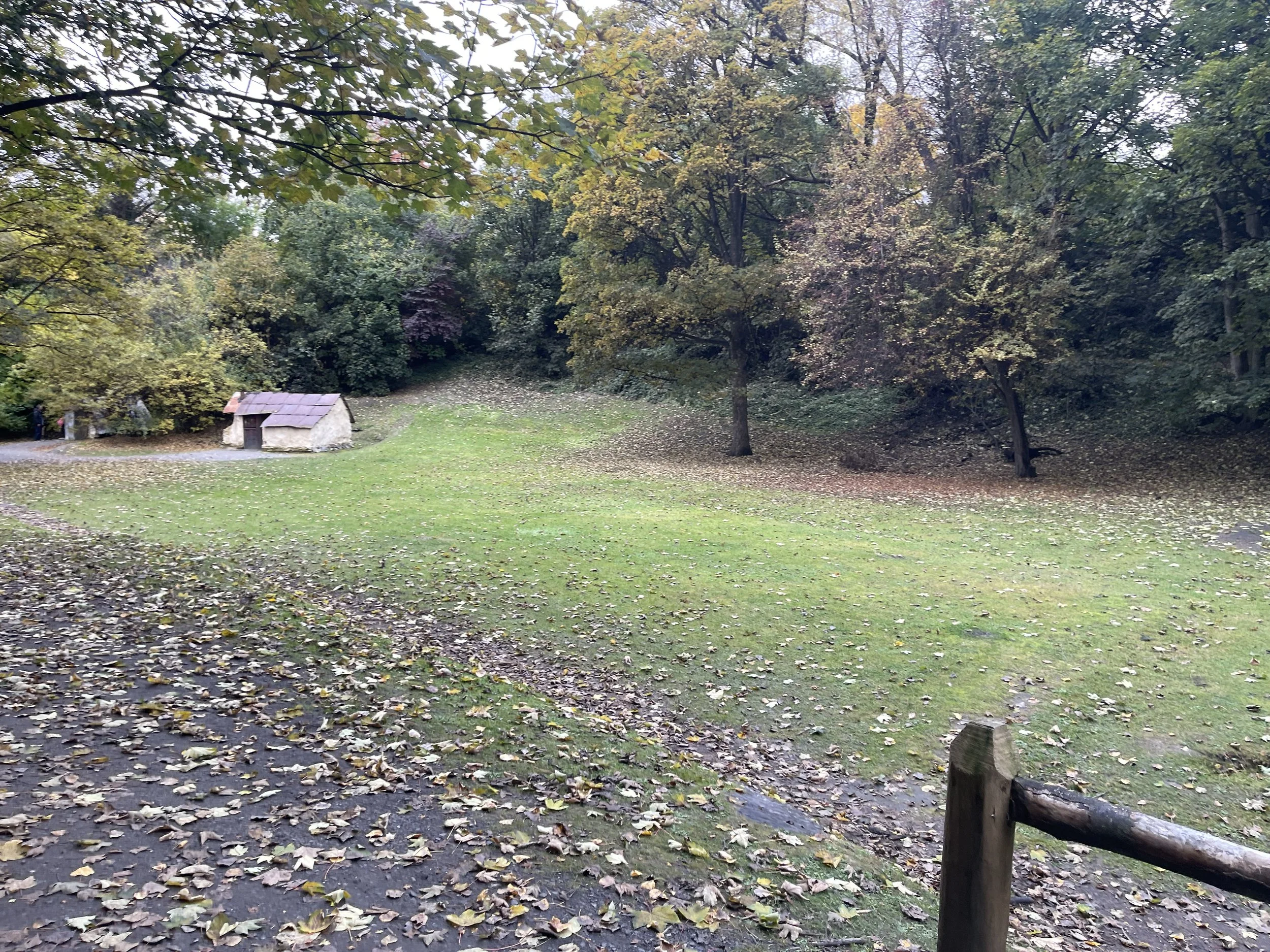
The current view of where the Chinese long hall once stood
The space between the Arrow River and Bush Creek, located just outside the edge of the township, which was subject to flooding and therefore unattractive for development by Europeans. However, it became an area where Chinese miners, typically shunned from integrating into European society, could form a small nucleus of a settlement. Its residents lived and worked in difficult conditions and faced widespread discrimination, but the settlement became an important centre for Chinese miners working throughout the Arrow, Macetown and Cardrona districts. At its peak in the 1870s, it contained about ten huts, at least two stores, cultivated gardens and a large communal building now generally known as the Chinese Long Hall.
The long hall building no longer exists, but the space on which it stood can still be viewed while walking through the Chinese village. The long hall appears to have stood at the social heart of the settlement. At approximately 14 metres long, it was much larger than the small huts surrounding it and provided a shared space in a community made up largely of men living far from their families and homeland. Archaeological excavations in the 1980s led by Neville Ritchie failed to uncover any trace of the building. However, one clear historic photograph of the site shows the building within the settlement. From the photograph, it appears to have been constructed out of earth sod with a corrugated iron roof. Other historic photographs from the period show that at least some of the early buildings in the district and other gold fields were built of sod. Most have not survived due to the ravages of weather and time, but some examples still exist, particularly in the drier parts of Central Otago. Being built of sod, it would have allowed Chinese miners with little access to more expensive timber or quarried building stone to erect such a large building through community effort. Being built of sod, it would also explain why nothing was left of the building during archaeological excavations after it disappeared in the early 20th century.
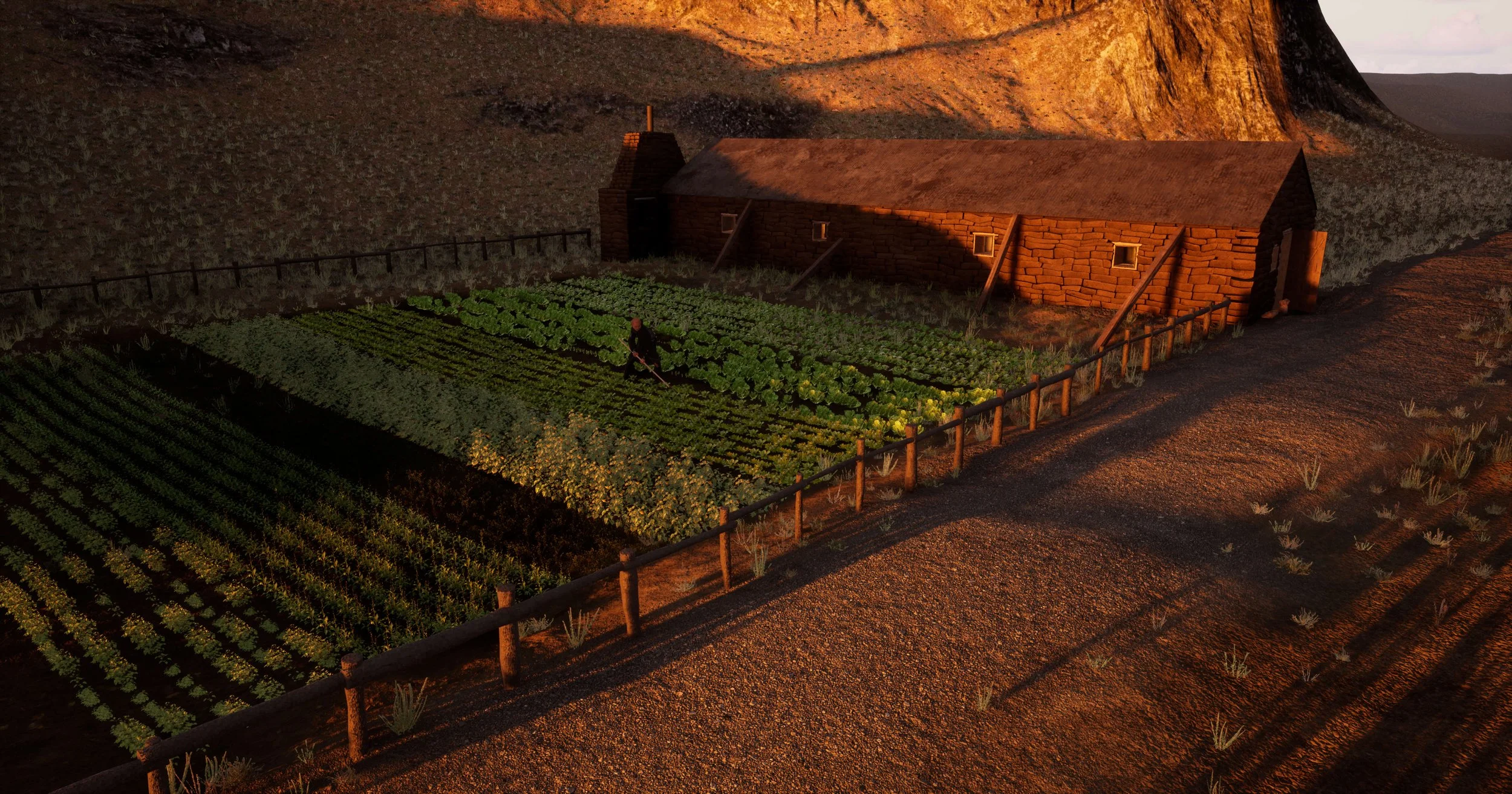
Digital reconstruction of the Chinese long hall as it might have been in the 1870s
Because nothing was found of the building in the 1980s, we have no direct evidence of how the interior of the long hall was laid out. Combined with limited contemporary European interest in documenting the more mundane aspects of Chinese gold mining life, we have to rely on accounts of similar buildings from other gold mining centres, particularly from Australia, to try and piece the long hall back together. Archaeological investigations of the surrounding huts suggest that for the most part these were simple residential buildings and would have not accommodated more than a handful of miners. Historic documentation notes that there were specific Chinese shopkeepers, and their stores were located at the ‘front’ of the settlement adjacent to the main commercial street (Buckingham Street). The long hall itself therefore likely became the focus of Chinese mining community, incorporating a social space where miners visiting from claims in the hills mixed with the small number of more resident Chinese miners who were working gold mining claims along Bush Creek and the Arrow River.
Within the long hall itself, spaces were likely informally split into areas for cooking, opium smoking, sleeping, and living quarters. The historic photograph of the building shows that the sod chimney was located at the back of the building, and therefore any cooking would have been focused towards the rear. The front (and possibly only) door faced north, and there were small windows along at least one wall. Rough sleeping platforms have been documented in similar buildings from other gold fields, and it appears likely that visiting miners would have found a place to sleep. Food imported from China and bought locally may have been stored in the building. Broken pieces of pottery have been found across Chinese gold field sites showing that a mix of European and Chinese foods were eaten. Accounts of Chinese miners congregating at settlements for feast days appear in some historic newspaper accounts, with concern and derision by some Europeans due to the letting off of firecrackers and ‘exoticism’ of the festivities. Opium smoking was undertaken by at least some Chinese miners, evidenced by historic accounts and archaeological excavations which have uncovered smoking instruments such as opium pipes. Fan tan appears to have been a popular gambling game, although with limited archaeological evidence. Outside the building, fencing visible in some photographs of the camp suggest that the flatter areas were used to grow a mixture of vegetables, some of which were sold to Europeans.
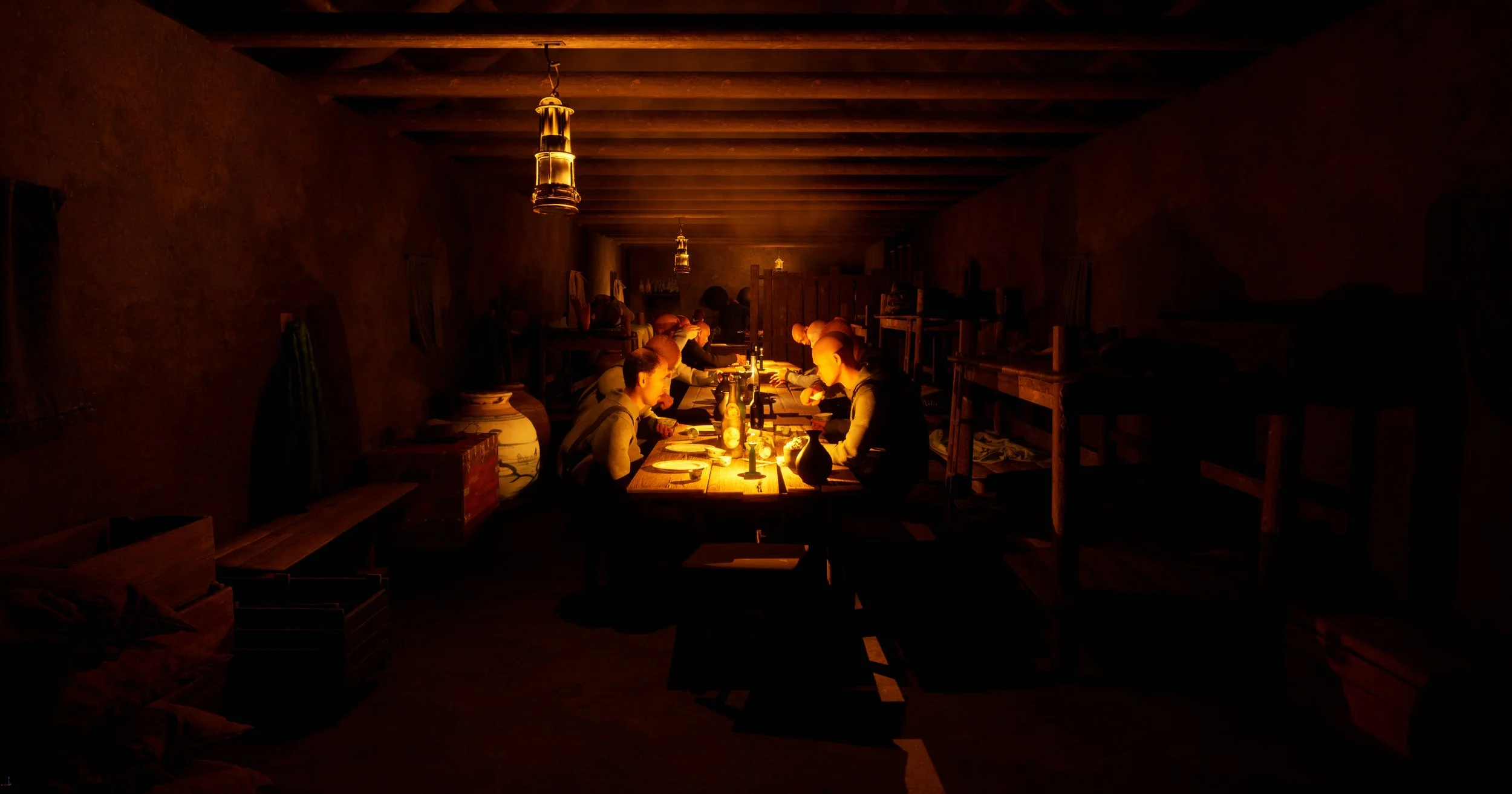
Interior reconstruction of the Chinese long hall showing communal eating
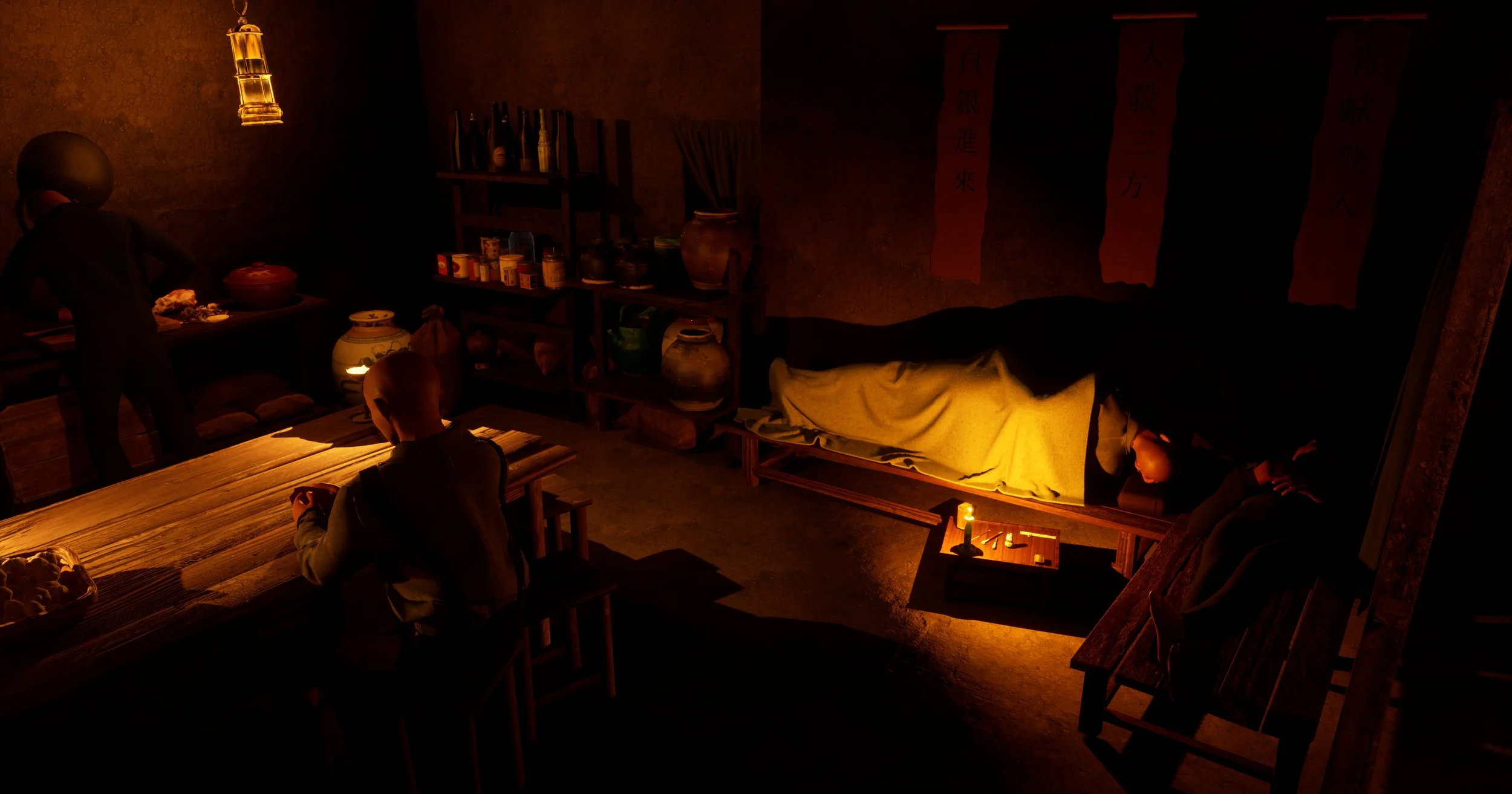
Digital reconstruction of opium smoking and food preparation area in the Chinese long hall
The long hall has therefore been digitally reconstructed using a combination of direct historic documentation in the form of photographs, incorporation of the geography of the site due to its excellent preservation from subsequent development, and the use of contemporary accounts of similar buildings. The buildings loss means that people can no longer experience the building as it might have felt, in contrast to the nearby rebuilt miners’ huts. For anyone visiting the camp during its 1870s peak, the building would have been extremely important for social connections to a number of Chinese men (and they were all men) who spent many long and lonely days mining claims in a country where many others became increasingly hostile towards them. The building only existed for a couple of decades at the most before it was lost, but during its limited existence it would become an extremely important part in helping form and shape the social lives of hundreds of Chinese miners living so far from their homeland.